
Air Quality Consulting in Perth
MRP Technical Consulting is an independent, senior-led air quality consultancy based in Perth, Western Australia. We help proponents and operators across WA with air quality, odour and emissions, delivering assessment, monitoring, dispersion modelling and approvals support.

What air quality consulting involves
In Perth and WA, we’re primarily consulting on air quality issues related to mine sites, ports, and industrial activities. This includes the monitoring and management of dust, odour, combustion emissions, and PM10, PM2.5, NO2, SO2 metals and air toxic concentrations at worksites and nearby communities.
Why your choice of air quality consultant matters
Your choice of consultant affects how defensible your air quality evidence is, and consequently how quickly your EPA referral or DWER application progresses. Weak evidence invites a request for further information, especially on projects deemed high-risk due to their size or proximity to communities.
An experienced air quality consultant maximises defensibility by designing each assessment to address specific criteria, with methodology matched to the project's regulatory context, and findings presented exactly as the regulator expects them.
Why work with MRP
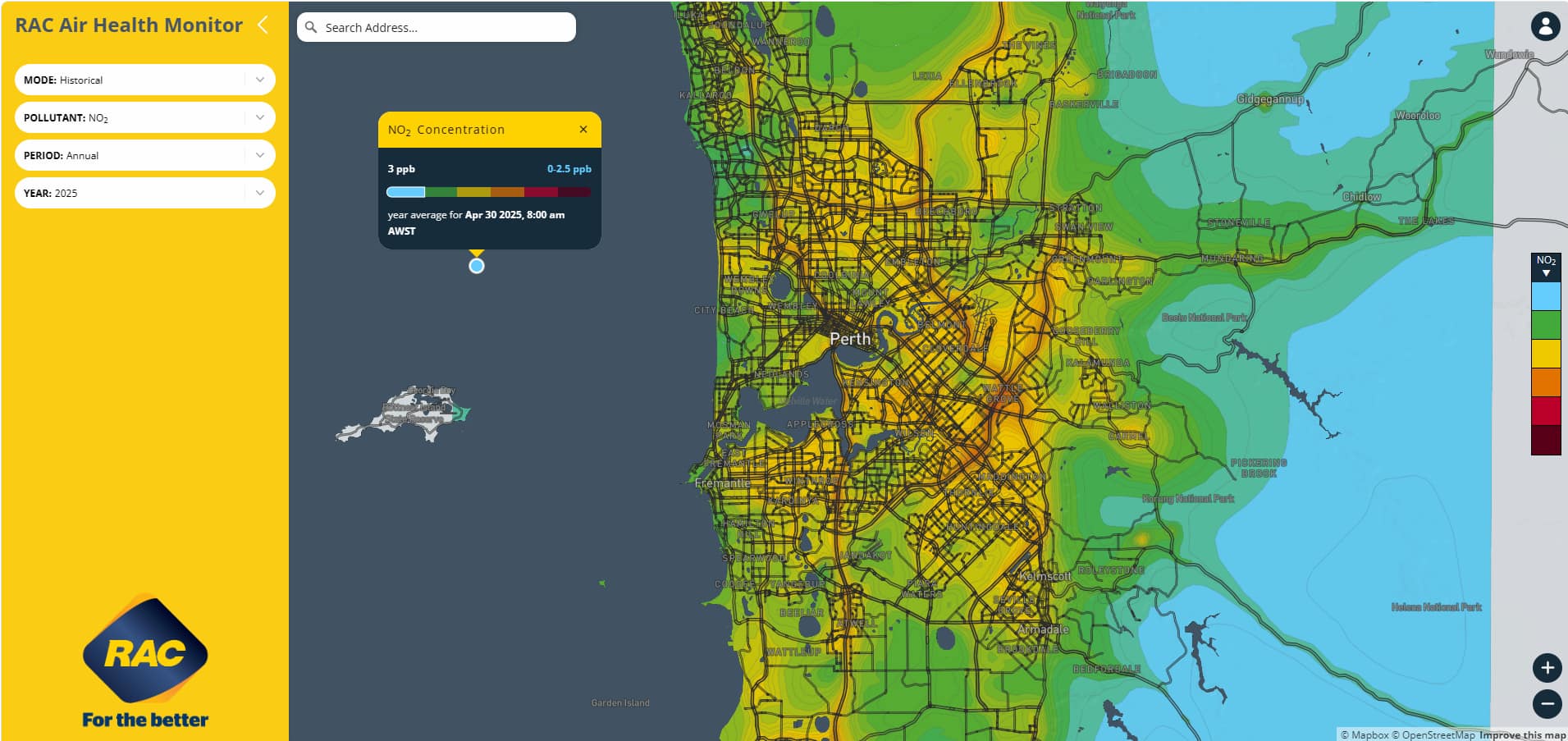
We’ve worked with some of the largest and most complex projects in Western Australia, including the Fimiston Open Pit (Super Pit), the RAC Air Health Monitor, and the Belisama Conventional Gas Project. It’s our experience with challenging projects that sets us apart when technical expertise is required.
Independent and consulting-only
We have no ties to laboratories or vendors, so our advice is independent, based on what your project needs, not what we're selling.
Senior-led
Senior practitioners lead every project from scoping to delivery, so the judgement applied to your assessment comes from decades of experience.

CASANZ-certified
Our managing principal is Martin Parsons, a CASANZ-certified air quality practitioner with over 25’ years experience in air quality issues.
Air quality services for Perth and WA
We provide independent air quality advice, assessment and consulting services.

Air Quality Monitoring and Testing
Ambient, source and workplace monitoring programs, from design through data interpretation to regulatory reporting.
Air quality monitoring
Air Quality Impact Assessments (AQIA)
Independent assessments for regulatory referrals, works approvals and licence compliance.
Air quality impact assessments
Atmospheric Dispersion Modelling
Regulator-accepted modelling to quantify off-site impacts, using the model that fits the assessment: AERMOD, CALPUFF, SCICHEM, WRF, TAPM or CMAQ.
Atmospheric dispersion modelling
Environmental Approvals Support
Get regulator-ready with a technical assessment that provides defensible air quality evidence and practical emission management for referrals, works approvals and licence compliance.
Environmental approvals services
Air Quality Forecasting
Air quality, meteorology and dust and odour event forecasting, wind energy resource assessments, and custom data APIs and decision-support tools.
Air quality forecasting
Air Quality Management Plans (AQMP)
Dust, odour and emissions management plans for proposed and ongoing projects.
Air quality management plansWhen to engage with us
We can support your project through its entire lifecycle, helping you manage emissions and constraints at feasibility and design, prepare the impact assessment and management plans at approval, control dust through construction, and run monitoring and reporting once you’re operating.. Take us for one stage, or across all of them.
Sectors we work in
MRP works with all sectors, but the majority of our work comes from Mining, Oil & Gas, Industrial and Infrastructure. Our team’s experience spans dust and blasting challenges for mine sites, fugitive and process emissions at industrial facilities, materials handling and combustion at ports and energy assets, and construction impacts on infrastructure projects.
How we can help
Monitoring and testing
We’re a consulting-only firm, so we design and interpret programs rather than sell hardware or lab time. We scope each to your pollutants, receptors and licence conditions across ambient, source and stack emissions, fence line, dust deposition, meteorological, odour, workplace exposure, and monitoring, both in accordance with relevant Australian standards as well lower cost monitoring options.

Emissions inventories
We build emission inventories that quantify process, fugitive and construction sources and reconcile them with a site's existing reporting, including the National Pollutant Inventory. A defensible inventory is what makes the modelling, the plan and the compliance reporting hold together.

Health and exposure risk assessments
Where the concern is people, not compliance numbers, our Health Risk Assessments evaluate exposure pathways and estimate dose against health-based criteria, which matters most for complex or multi-pollutant emissions. It answers the questions behind the majority of approvals: is anyone actually at risk? and how do we know?

Greenhouse gas and emissions reporting
We quantify greenhouse gas emissions alongside air pollutants and prepare the mandatory reporting a project carries, including National Pollutant Inventory and National Greenhouse and Energy Reporting obligations. Emissions quantification and reporting, kept to what the regulation requires.

Strategy and regulatory advice
Thanks to our team's experience across air quality science, policy and regulation, we can advise on the approvals strategy itself: the right pathway, what a regulator will expect, where the risk sits, and how to sequence the work. Every engagement works backwards from what your submission or approval requires.

Air quality data and decision-support tools
Beyond one-off assessments, we build the data layer operations run on: air quality and meteorological forecasting, dust and odour event forecasting, low-cost sensor programs, and custom data feeds through APIs and decision-support tools. We are independent of hardware vendors, so the tools fit the decision, not a product we sell.
Independent review and second opinions
Because Martin has worked as a technical reviewer for environmental regulators, we are often asked to review air quality work, not just produce it: a peer review before submission, a second opinion on an assessment prepared elsewhere, or a check on approval conditions.
Frequently asked questions
No. We are consulting-only and independent of labs and vendors. We design and interpret monitoring programs and select the methods and providers that fit your project.
The one that fits: AERMOD for near-field work and complex terrain, CALPUFF for coastal, calm-wind and long-range cases, SCICHEM where NOx-to-NO2 chemistry matters, CMAQ for ozone and airshed-scale work, and WRF or TAPM for meteorological inputs.
Scoping the sources, pollutants and criteria; mapping sensitive receptors; reviewing baseline data; characterising emissions; modelling ground level concentrations; comparing against the criteria; and resolving any exceedance with the least intervention necessary.
Dust and particulates (PM10 and PM2.5) from mining, materials handling and ports. Odour from industrial, waste and processing sites, assessed with olfactometry. Combustion and process emissions (NO2, SO2, CO). Air toxics and volatile organic compounds against the NEPM (Air Toxics). Crystalline silica and other airborne contaminants. Greenhouse gases where reporting requires it.
Thanks to our team's experience across air quality science, policy and regulation, we can advise on the approvals strategy itself: the right pathway, what a regulator will expect, where the risk sits, and how to sequence the work. Every engagement works backwards from what your submission or approval requires.
In Western Australia, an air quality assessment is often required for a works approval or licence application to DWER, a referral to the EPA, or federal assessment under the EPBC Act, each judged against criteria such as the Ambient Air Quality NEPM. A senior consultant knows what each expects and structures your assessment to match, whether it supports a new approval or an existing Ministerial Statement condition.
Monitoring measures what is in the air now. Modelling predicts where emissions will travel and what concentrations they produce off site, including for a facility not yet built. Most assessments use both.